

What We Shouldn’t Delegate to AI
AI may not need to become more human. We may simply adapt ourselves to its metrics, rankings, and decisions – and delegate more than we intended

I recently read Audrey Tang’s essay on AI and humanism, and I can’t say I agree with all of it, but it left me thinking.
The fear is clear enough: machines will imitate us, outperform us, and finally replace us. Tang turns the argument around. He said instead humans are remarkably adaptable, and in an AI-saturated world that strength may become our weakness.
We may start adapting ourselves to the machines.
We will write in ways that are easier for models to understand, organize work around what can be measured automatically, and make opinions shorter because ambiguity is inconvenient for automated systems.
Nobody will necessarily force us. We will do it ourselves, because being easy to process will be rewarded. It will be called productivity, relevance, or simply “using the tools properly.”
So the risk may be that people learn to become convenient for machines.
Life as a dashboard
Much of life has already become a strange form of gamification in which almost everything is measured, scored, rewarded, or turned into a streak. I don’t know whether there is some higher purpose behind it or whether unrelated product decisions pushed us in the same direction.
You work out and close the rings on your Apple Watch. A ride has a pace, heart-rate zones, training load, and a personal record. You order enough Uber rides and unlock another status level. You learn a language and, at some point, protecting the Duolingo streak can feel more urgent than learning the language itself.
Even rest is scored. Sleep arrives with a score, recovery with a percentage, and a quiet evening with a warning that you still have not reached your step target.
None of this is necessarily bad. Metrics can motivate us and show progress that would otherwise be invisible. I like seeing how many hours I spent cycling in each heart-rate zone. The problem begins when measurement quietly becomes the purpose.
You are no longer exercising because you want to feel better; you are exercising to close the ring. The score was supposed to describe the activity, but the activity starts reorganizing itself around the score.
And AI enters a world where we have already learned this behavior.
Once work, communication, health, education, and social life are mediated by models, we will quickly discover what gets a better result: which wording passes the filter, which format receives a faster response, and which parts of our experience are better left out because the system has nowhere to put them.
Not every manual task is worth protecting
Tang is not arguing that we should stop using AI or defend every manual task just because a human used to do it.
There is nothing especially humanistic about writing every email from scratch. A summary can save an hour, and translation can make a conversation possible that otherwise would not happen.
The useful distinction is between what can be delegated and what must remain ours.
A model may help me find the words, but it cannot stand behind the promise those words contain. It can prepare me for a difficult conversation, but it cannot inherit responsibility for what I say. It can produce an apology, but it cannot be sorry. It can recommend a decision, but it cannot accept the consequences.
Responsibility rarely disappears in one dramatic step. First the model prepares the options. Then it ranks them. Then the recommendation becomes the default. At some point, the human is still “in the loop,” but mostly to press “Approve”.
When something goes wrong, everyone can point elsewhere. The system rejected the application. The algorithm lowered the score. The assistant sent the message. Nobody made the decision, apparently.
The model is not the whole system
The further I read, the more I felt that Tang sometimes connects these problems too directly to AI itself.
Models do not decide to rank employees, optimize attention, or become the main interface between a person and an institution. People build those systems around them.
The same model can translate a conversation or sit inside a system that monitors workers, filters applicants, and decides what becomes visible. The capability may be similar. The surrounding incentives are not.
“AI did it” is becoming a convenient explanation. It makes technology sound like weather: something that arrived on its own and something everyone simply has to adapt to.
But an algorithm does not choose its role. Someone decides what it should optimize, which metric matters, when human review becomes too expensive, and whether a person can appeal.
So perhaps the main problem is not delegation to AI as such. It is delegation without a clear owner.
Delegating work, not responsibility
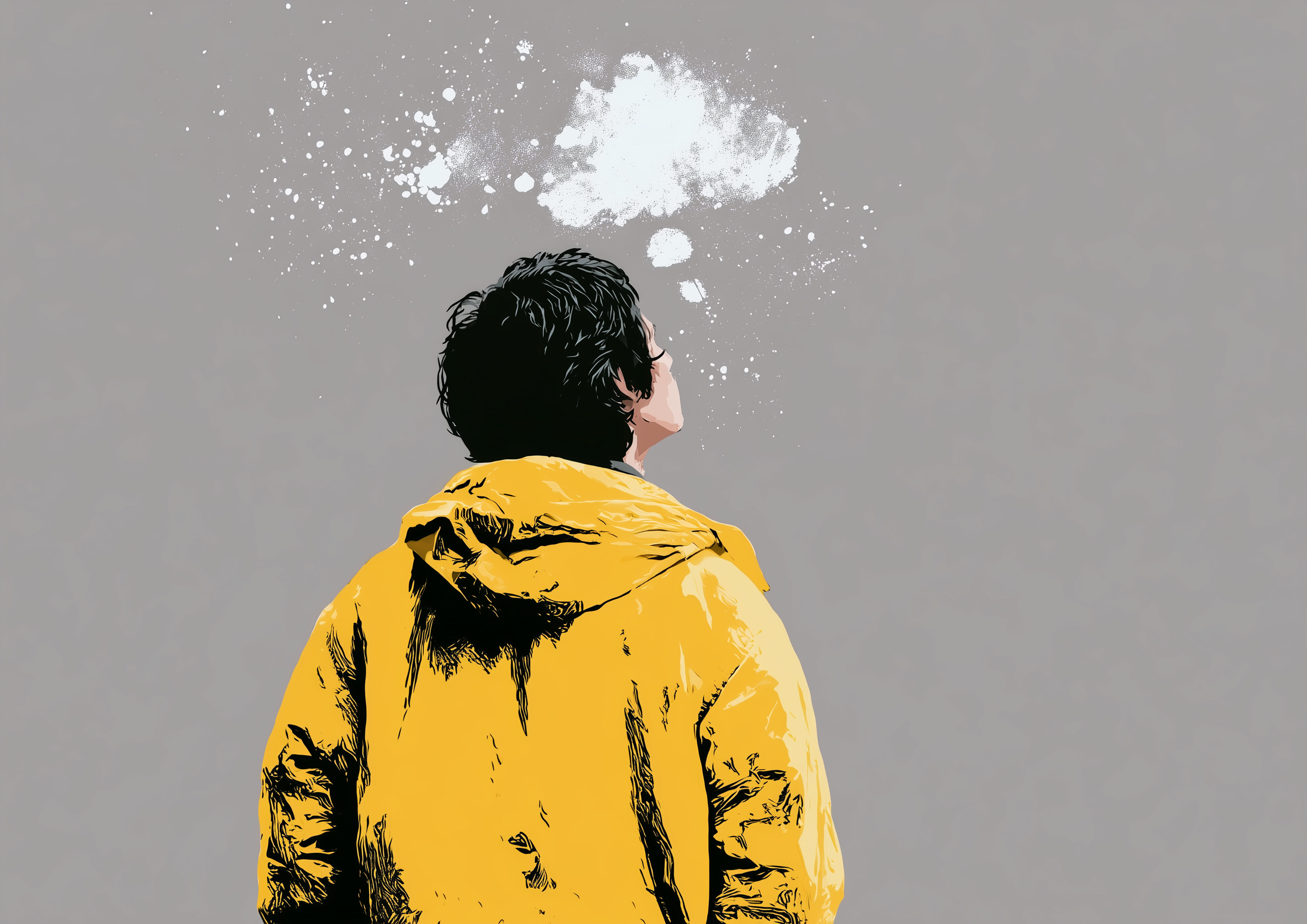
I use AI in software development every day, and I am comfortable delegating quite a lot to it. It can write code, generate tests, prepare documentation, and structure a decision.
But there is still a difference between preparing a decision and owning it.
The model can suggest an architecture, but it cannot decide which trade-offs the organization is prepared to live with. It can identify risks, but not decide which risks are acceptable. It can produce an implementation, but it cannot be accountable for releasing it.
The line I find most useful is simple:
Delegate the draft, not the promise.
Delegate the analysis, not the choice of values.
Delegate preparation, not the conversation itself.
This does not mean that a human must approve every tiny automated action. But responsibility should remain traceable. Someone must define the boundaries, explain the decision, and be able to stop the system.
If nobody can explain why a decision was made, override it, or take responsibility for the outcome, then we did not simply automate a task. We automated the disappearance of accountability.
This is probably what I took from Tang’s essay in the end. The problem is not that we use AI too much, or that we measure things that were previously invisible. The problem begins when the measurement becomes the goal, and delegation becomes an excuse not to decide.
The more capable these tools become, the more deliberately we will have to choose what should remain ours. See you in a next one!
Explore more: